

Blog
How to Choose a Motorized Card Dispenser for Self-Service Kiosks?
Introduction
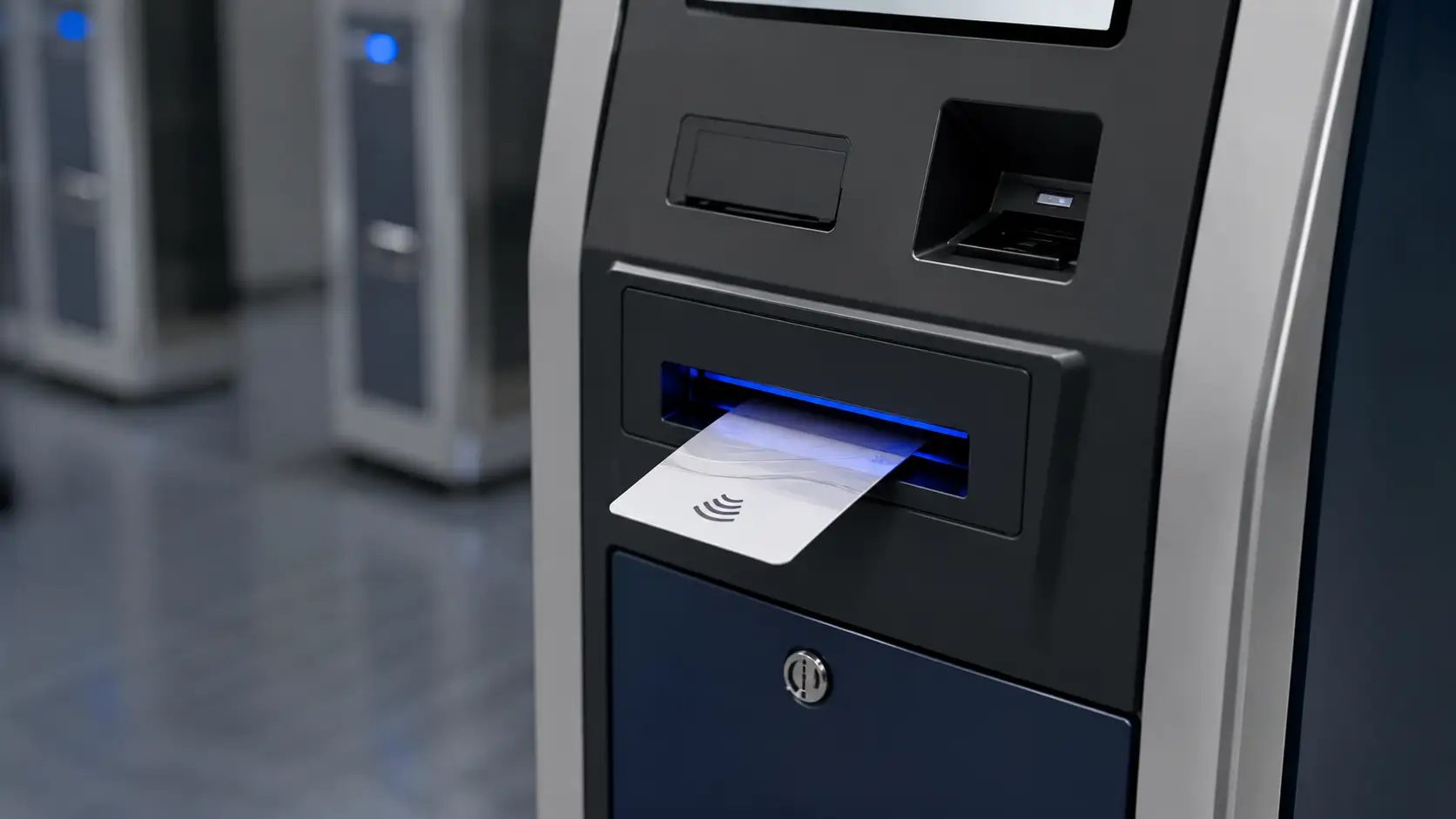
Motorized card dispensers have become a critical component in modern self-service kiosks. From hotel self check-in terminals and visitor management systems to smart lockers and membership card issuance kiosks, automated card dispensing helps reduce staffing requirements while improving customer experience.
However, choosing a motorized card dispenser is rarely as simple as comparing card capacity or communication interfaces.
Experienced system integrators know that long-term reliability, card separation performance, RFID compatibility, maintenance accessibility and software integration support often have a greater impact on deployment success than headline specifications.
This guide explains the key factors that should be evaluated before selecting a motorized card dispenser for a self-service kiosk project.
Quick Answer
To choose a motorized card dispenser for a self-service kiosk, system integrators should evaluate card type, card thickness, hopper design, single-hopper or multi-hopper architecture, RFID or magnetic card support, communication interface, SDK availability, Linux or Windows compatibility, maintenance access, and long-term dispensing reliability.
The best dispenser is not simply the model with the largest capacity. It is the model that can separate cards reliably, report device status clearly, fit the kiosk enclosure, support the required card workflow, and remain serviceable after deployment.
Why Motorized Card Dispensers Have Become Essential in Self-Service Systems
As self-service technology expands across hospitality, healthcare, transportation, government services and smart buildings, automated credential issuance has become increasingly important.
Typical applications include:
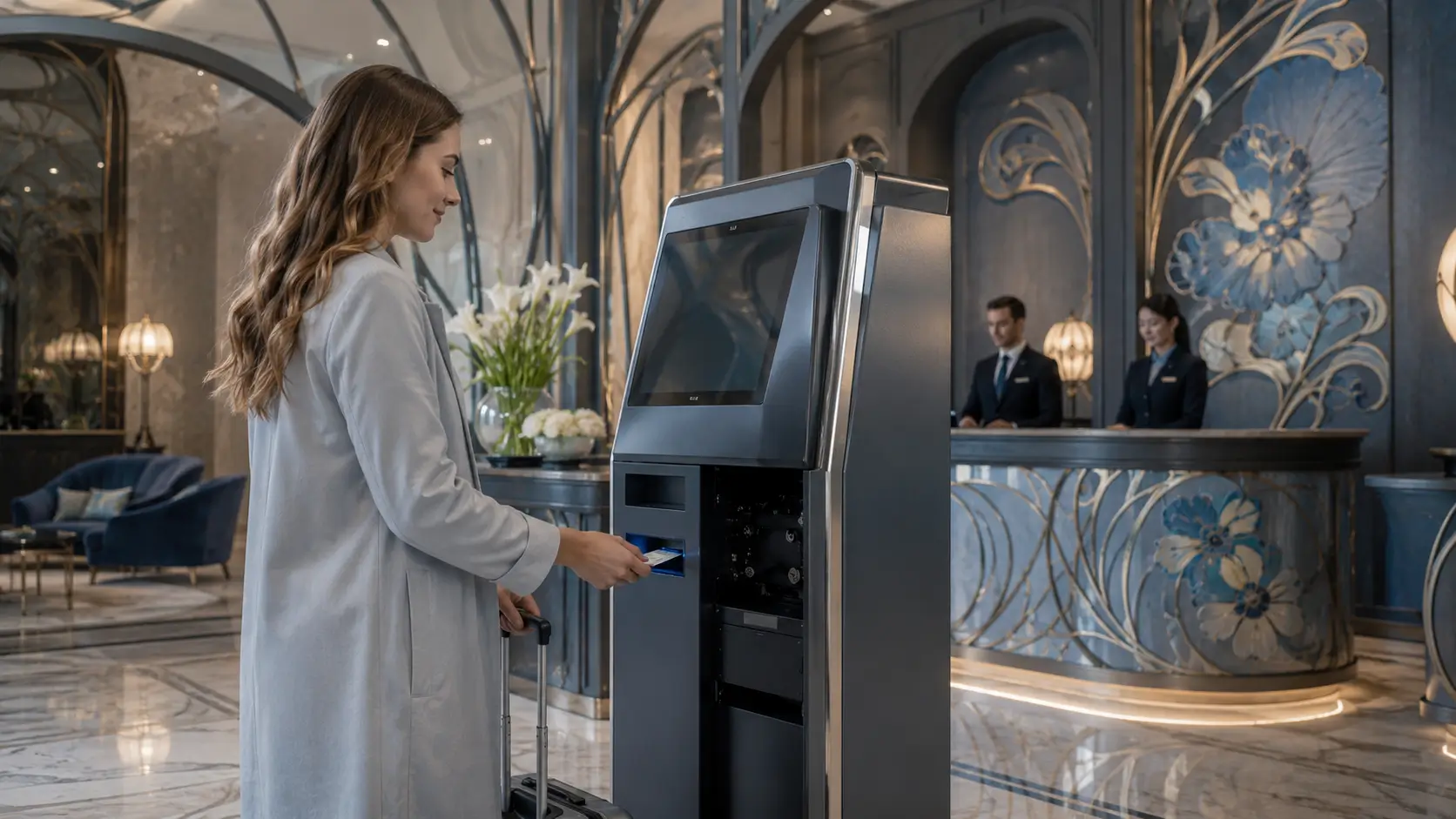
Hotel Self Check-In Kiosks
Issuing RFID room cards automatically after guest registration.
Visitor Management Systems
Providing temporary visitor badges and access cards.
Smart Locker Systems
Dispensing access credentials for parcel collection and secure storage.
Membership Card Issuance Kiosks
Creating and issuing customer membership cards on demand.
Government and Healthcare Service Terminals
Providing identification cards and access credentials for public services.
For these applications, unattended operation is often a core project requirement, making reliable card dispensing a critical system component. 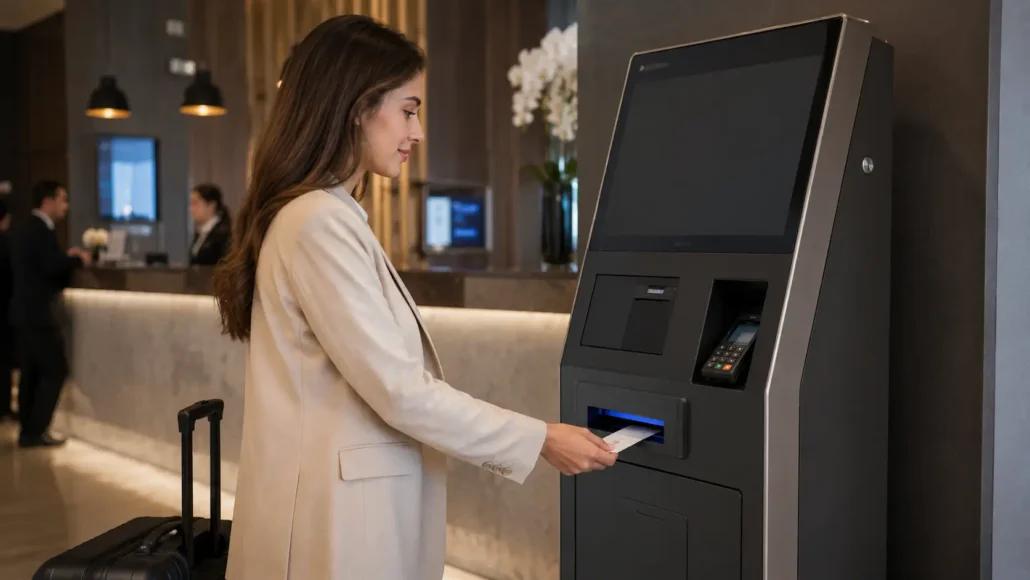
What Experienced Integrators Usually Evaluate First
When evaluating a card dispenser, experienced integrators rarely begin with card capacity.
Instead, they often focus on:
- Card dispensing reliability
- Double-card prevention
- Card separation accuracy
- RFID compatibility
- Hopper architecture
- SDK availability
- Linux support
- Maintenance accessibility
- Deployment environment
- Long-term operational stability
These factors frequently determine whether a deployment remains successful after months or years of operation.
Motorized Card Dispenser Selection Checklist
| Selection Factor | What to Confirm | Why It Matters |
| Card type | RFID, magnetic stripe, IC card, barcode card, membership card | Card technology affects reader, encoder, and workflow design |
| Card thickness | Actual production card thickness and tolerance | Thickness variation can affect card separation |
| Hopper design | Single hopper or multi-hopper | Determines card variety, loading method, and maintenance complexity |
| Dispensing reliability | Single-card separation, jam prevention, card path stability | Reliability matters more than capacity in unattended systems |
| Interface | RS232, USB, TCP/IP, Virtual COM | Must match kiosk controller and software architecture |
| SDK support | Documentation, sample code, error handling, OS support | Reduces integration time and deployment risk |
| Status feedback | Hopper empty, card taken, jam, double-card, communication error | Enables safe unattended operation |
| Maintenance access | Loading, cleaning, jam removal, component replacement | Poor access increases service cost |
Why Reliability Matters More Than Card Capacity
One of the most common mistakes during product selection is overemphasizing hopper capacity.
Many projects compare:
- 200-card hopper
- 300-card hopper
- 500-card hopper
While capacity influences refill frequency, it does not guarantee operational reliability.
A dispenser with a large hopper but poor card separation performance may generate:
- Double-card dispensing
- Card skew
- Card jams
- Misfeeds
- Increased service calls
For most deployments, reliable card handling creates more operational value than additional storage capacity.
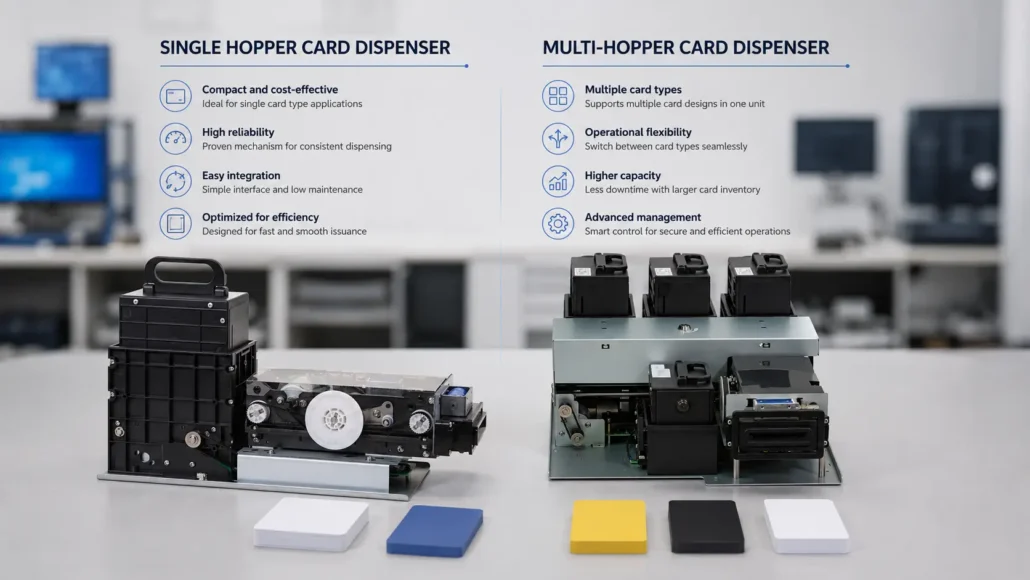
Single Hopper vs Multi-Hopper Design
Different applications require different dispenser architectures.
Single Hopper Dispensers
Advantages:
- Simpler integration
- Lower cost
- Easier maintenance
- Smaller installation footprint
Common applications:
- Hotel kiosks
- Visitor registration systems
- Membership card issuance
Multi-Hopper Dispensers
Advantages:
- Multiple card types
- Dynamic card selection
- Greater operational flexibility
Common applications:
- Government service terminals
- Healthcare systems
- Smart city projects
- Multi-service kiosks
The appropriate design depends on workflow complexity and credential management requirements.
RFID Support Should Be Considered Early
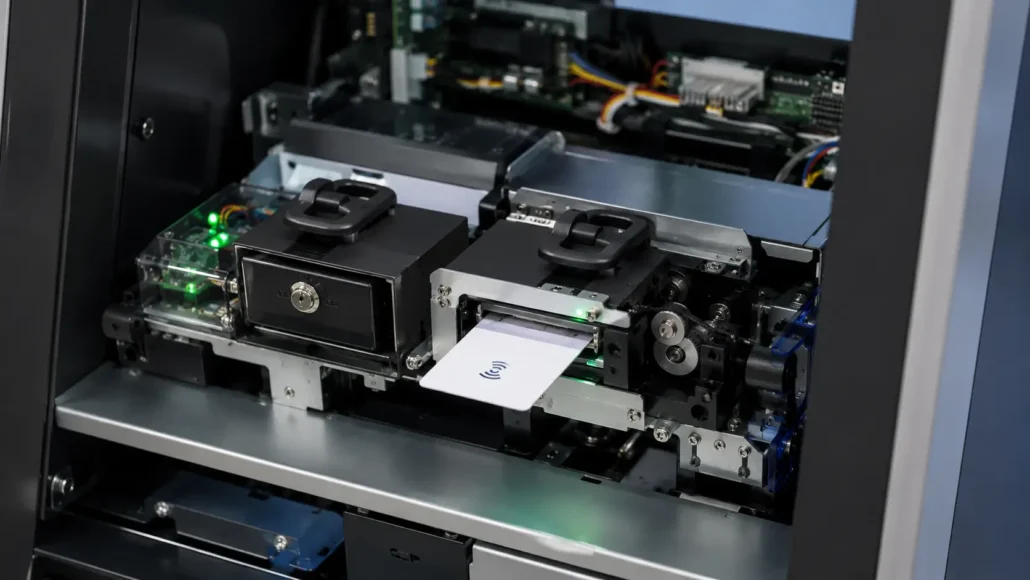
Many modern kiosk projects require RFID-enabled cards.
Common technologies include:
- MIFARE Classic
- MIFARE DESFire
- NTAG
- ISO14443
- ISO15693
When RFID functionality is required, integrators should verify:
- Reader compatibility
- Encoding capability
- Card initialization workflow
- Security requirements
- SDK support
RFID requirements often influence dispenser selection long before deployment begins.
Why Hopper Design Matters More Than Most Teams Expect
Hopper design has a direct impact on dispensing consistency.
Experienced deployment teams often evaluate:
- Card separation mechanism
- Spring pressure consistency
- Dust resistance
- Refill convenience
- Card stack stability
- Long-term wear characteristics
Poor hopper architecture can increase:
- Double-card dispensing
- Misfeeds
- Maintenance frequency
- User complaints
This is one reason hopper design frequently becomes a key evaluation factor during large-scale deployments.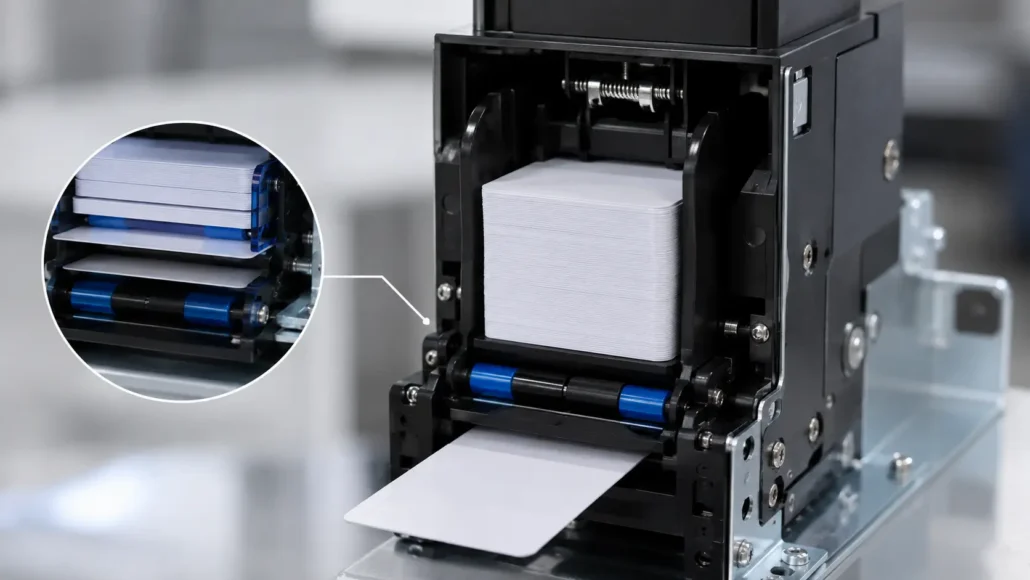
Linux Support and SDK Resources
Hardware selection is only one part of a successful project.
Many self-service kiosks operate on:
- Linux
- Windows
- Android
- Embedded platforms
Before selecting a card dispenser, project teams should evaluate:
- SDK availability
- Driver support
- Communication protocols
- Sample code resources
- Technical documentation
- Engineering support availability
Reliable development resources can significantly reduce integration time and project risk.
Deployment Reality: What Changes After Installation
Laboratory testing rarely reflects real deployment conditions.
After installation, systems may encounter:
Dust and Contamination
Dust accumulation can affect card transport mechanisms and sensor performance.
Humidity and Environmental Changes
Environmental conditions may influence card handling consistency.
Card Quality Variations
Cards from different suppliers may have varying thickness, stiffness and surface characteristics.
High Transaction Volumes
Heavy daily usage can reveal issues not visible during testing.
Maintenance Delays
Distributed deployments often experience longer maintenance intervals than initially planned.
Experienced integrators evaluate how a dispenser performs under these conditions rather than relying solely on laboratory results.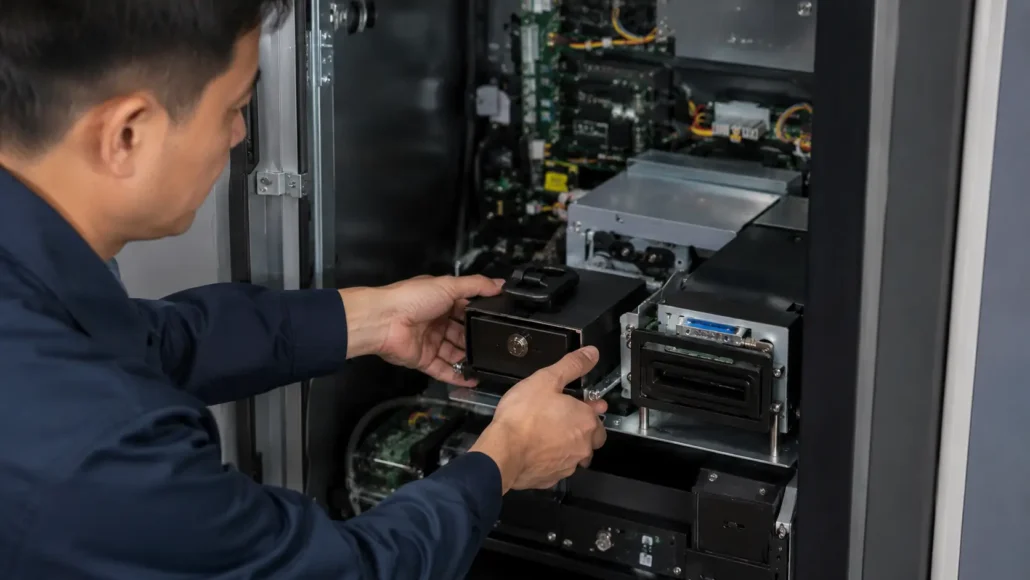
Common Questions System Integrators Ask
Before selecting a motorized card dispenser, project teams frequently ask:
How many cards should the hopper hold?
The answer depends on expected transaction volume and maintenance schedules rather than a fixed number.
RFID or Magnetic Card Support?
RFID cards are increasingly common, particularly in hospitality and access control applications.
Single Hopper or Multi-Hopper?
Workflow complexity and card variety typically determine the appropriate solution.
How Easy Is Maintenance?
Maintenance accessibility often influences total operating cost over the life of the deployment.
Does Linux Support Matter?
For many kiosk projects, Linux compatibility and SDK support are essential requirements.
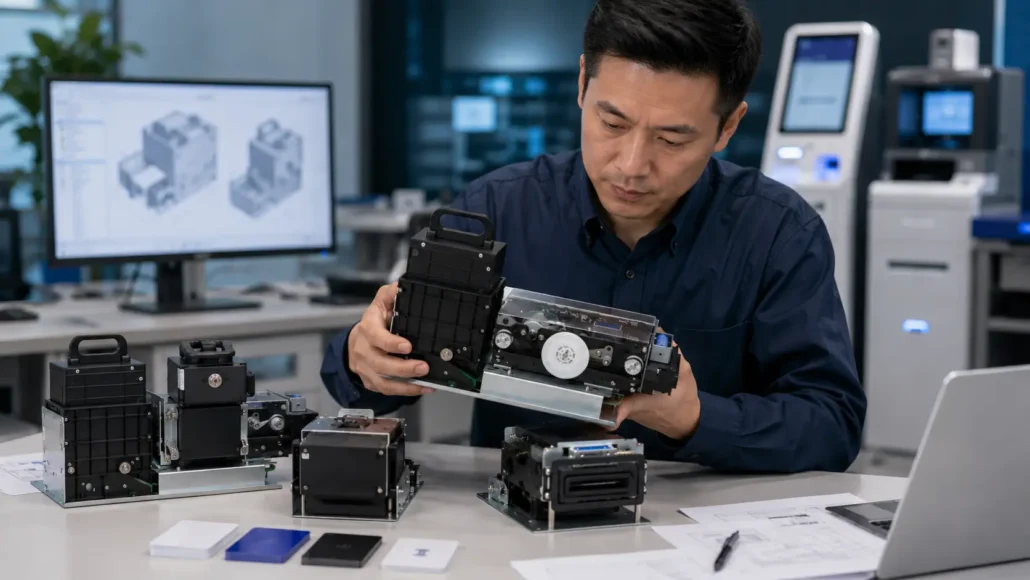
Recommended Card Dispenser Solutions
SNR-K750-L
Recommended for:
- Hotel self check-in kiosks
- RFID card issuance
- Visitor management systems
Advantages:
- Reliable motorized dispensing
- RFID integration support
- Compact architecture
- Long-term operational stability
SNR-CD212-M8
Recommended for:
- Visitor management platforms
- Smart locker systems
- Access credential issuance
Advantages:
- Stable card separation
- Easy maintenance
- Integration-friendly design
SNR-K720
Recommended for:
- Membership card issuance
- Self-service kiosks
- Automated card distribution systems
Advantages:
- Cost-effective deployment
- Flexible integration
- Reliable operation
SNR-K750C
Recommended for:
- Membership card issuance kiosks
- RFID loyalty card systems
- VIP card issuance terminals
- Campus card registration kiosks
- Customer self-service card issuing projects
Advantages:
- Suitable for RFID membership card issuance
- Stable motorized card dispensing
- Supports unattended self-service deployment
- Practical for loyalty, VIP and campus card programs
- Integration-friendly design for kiosk projects
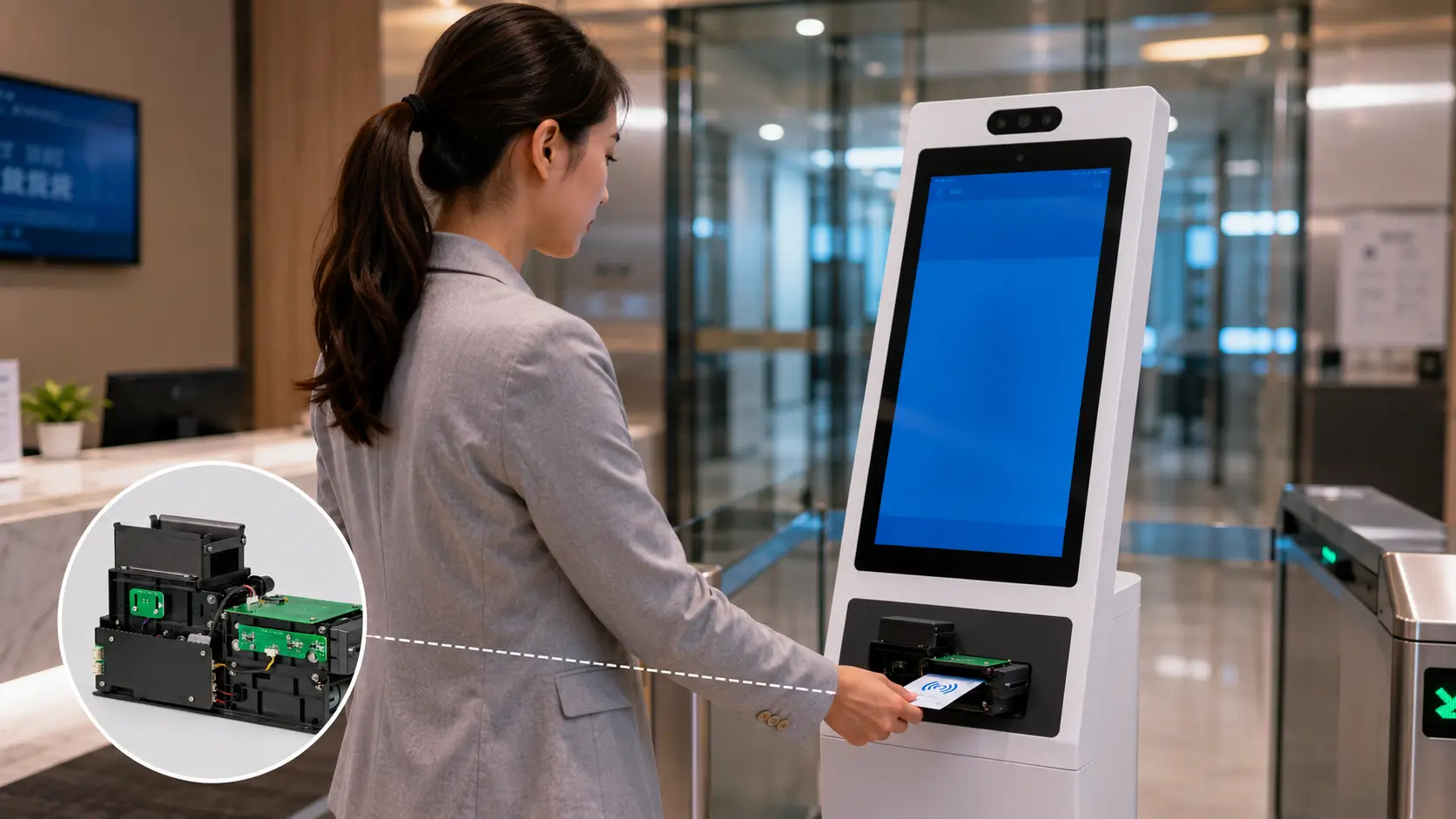
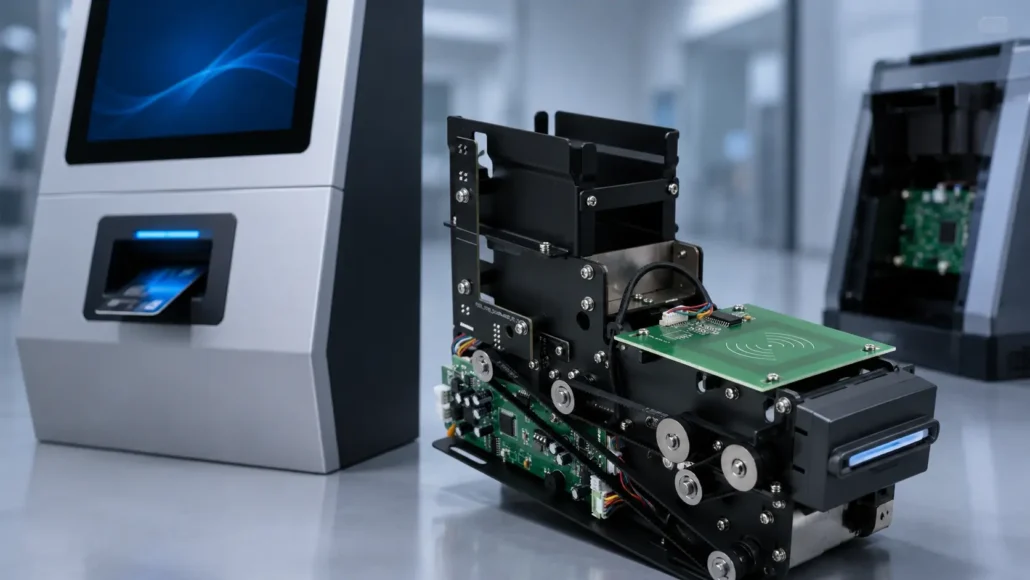
SNR-K750C is a practical choice for projects that require automated RFID membership card issuance with stable dispensing performance and flexible kiosk integration.
What Successful Deployments Usually Have in Common
Across hotel kiosks, visitor registration systems and smart locker projects, successful deployments often share several characteristics:
- Reliable card separation
- Stable hopper design
- Appropriate RFID support
- Strong SDK resources
- Easy maintenance access
- Clear integration documentation
- Hardware selected for the actual deployment environment
Projects that prioritize these factors typically experience fewer service interruptions and lower long-term operating costs.
Conclusion
Choosing a motorized card dispenser involves much more than comparing card capacity or interface specifications.
Successful deployments are usually built around reliable card handling, effective hopper architecture, RFID compatibility, maintenance efficiency and long-term operational stability.
Experienced system integrators therefore evaluate deployment realities and integration requirements before making a final hardware selection.
The best card dispenser is rarely the one with the largest hopper. It is usually the one that continues operating reliably after years of unattended use.
Need Help Selecting a Motorized Card Dispenser?
Send SNRO your card type, card thickness, expected capacity, operating system, interface requirement, kiosk layout, and dispensing workflow. Our team can help recommend a suitable motorized card dispenser configuration for your self-service project.
Related Resources
- Hotel Self Check-In Hardware Solutions
- Telecom self-service kiosk hardware Solutions
- Visitor Management Hardware Solutions
- Smart Locker Hardware Solutions
- Access Control Kiosk Hardware Solutions
- Common RFID Card Dispensing Challenges in Self-Service Kiosks
- How Dust and Humidity Affect Card Dispenser Reliability
- Why Card Hopper Design Matters More Than Most Teams Realize
- Linux Kiosk Printer Integration Guide
- Kiosk Printer SDK Guide
Learn more about system architecture: Card Dispenser Hub
FAQ
What is a motorized card dispenser?
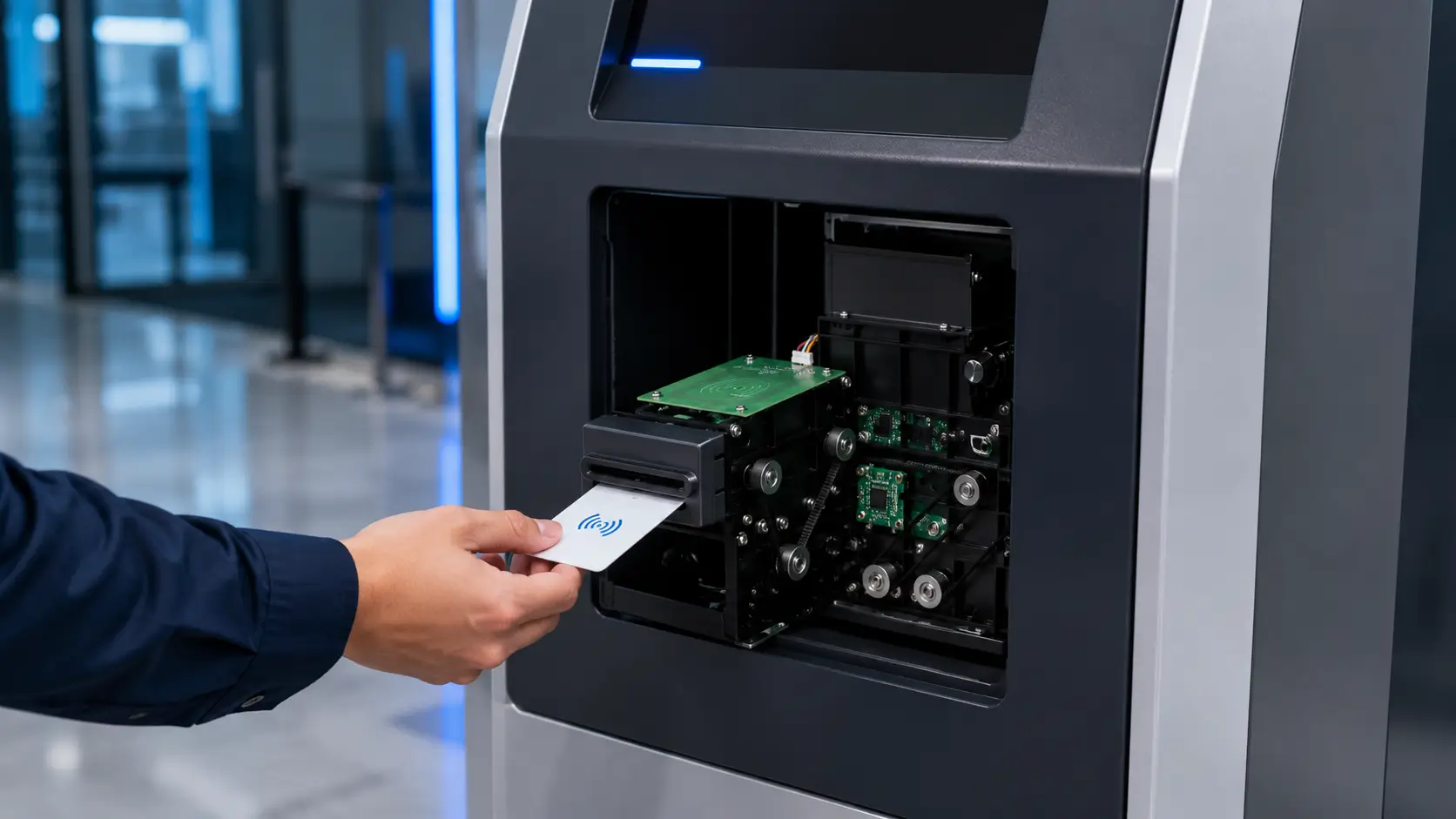
A motorized card dispenser is a device that automatically stores, separates and issues plastic cards under software control in self-service systems.
What cards can be dispensed?
Most systems support RFID cards, IC cards, hotel room cards, membership cards and access control cards.
What is the difference between a card dispenser and a card collector?
A card dispenser issues cards to users, while a card collector retrieves and stores cards after use.
Is RFID support important?
For many hospitality, visitor management and access control projects, RFID compatibility is a key requirement.
What causes card dispensing failures?
Common causes include poor card quality, dust contamination, hopper design issues and inadequate maintenance.
How many cards should a hopper hold?
The ideal capacity depends on transaction volume and maintenance schedules.
Do card dispensers support Linux?
Many industrial card dispensers provide Linux-compatible SDKs and communication protocols.
What industries use motorized card dispensers?
Hospitality, healthcare, transportation, government services, smart lockers, visitor management and membership systems are among the most common applications.
How important is hopper design?
Hopper design directly affects card separation accuracy, dispensing reliability and maintenance frequency.
What should integrators evaluate first?
Reliability, RFID compatibility, hopper architecture, SDK availability and maintenance accessibility are usually the most important factors.
What is the most important factor when choosing a motorized card dispenser?
For unattended kiosks, reliable card separation, clear status feedback, SDK support, and maintenance accessibility are usually more important than hopper capacity alone.
Should system integrators test with real cards before approval?
Yes. Production card samples should be tested because card thickness, surface finish, static behavior, and storage conditions can strongly affect dispensing performance.
When is a multi-hopper card dispenser necessary?
A multi-hopper dispenser is useful when the kiosk must issue different card types, card designs, credential classes, or tenant-specific cards. If all users receive the same physical card, a single hopper is often simpler.