


Blog
Why Double-Card Issues Happen in Card Dispenser Systems?

What Many Teams Only Learn After Real Deployment?
Most card dispenser systems look extremely reliable at the beginning.
During testing, cards separate cleanly.
Dispensing feels smooth.
Everything appears stable.
At that stage, very few teams worry seriously about double-card issues.
Then the kiosk starts running unattended every day.
A few months later, strange things begin happening quietly.
A dispenser occasionally feeds two cards together.
A retry suddenly appears during busy hours.
One kiosk starts behaving differently from the others even though the hardware looks identical.
Technicians inspect the system.
Nothing obvious looks wrong.
Then the same issue appears again three days later.
That pattern is extremely common in real self-service deployments.
Especially in:
- hotel self check-in kiosks
- parking systems
- visitor management terminals
- membership card kiosks
- unattended access-control systems
Because most double-card problems do not begin as dramatic hardware failure.
They begin as tiny inconsistencies that slowly become operational problems later.
Quick Answer
Double-card issues usually happen when two cards separate from the hopper at the same time or enter the card path too closely together. In real self-service kiosk deployments, this can be caused by card thickness variation, static electricity, surface friction, worn separation components, poor card storage, dust, humidity, or incorrect hopper loading.
For system integrators, double-card prevention should be evaluated before deployment using production card samples, realistic hopper loading conditions, repeated dispense testing, and proper error detection from the dispenser controller.
Most Systems Look Stable During Pilot Deployment
This is one reason many projects underestimate long-term card separation problems.
Pilot environments are usually controlled.
Cards are:
- new
- clean
- flat
- properly stacked
- carefully loaded
Technicians are nearby.
Humidity is stable.
Traffic volume is still relatively low.
Under those conditions, almost every dispenser looks reliable.
Then rollout expansion begins.
And that is usually when reality slowly starts changing system behavior.
Most Double-Card Problems Begin Quietly
This part matters a lot.
Because real dispenser failures rarely start dramatically.
Usually it begins with things like:
- one unexpected retry
- occasional hesitation
- inconsistent separation
- a random multi-card feed once every few hundred transactions
At first, nobody treats it as serious.
Then it starts happening slightly more often.
Especially during busy operating hours.
That is usually the moment technicians begin realizing the problem is not completely random anymore.
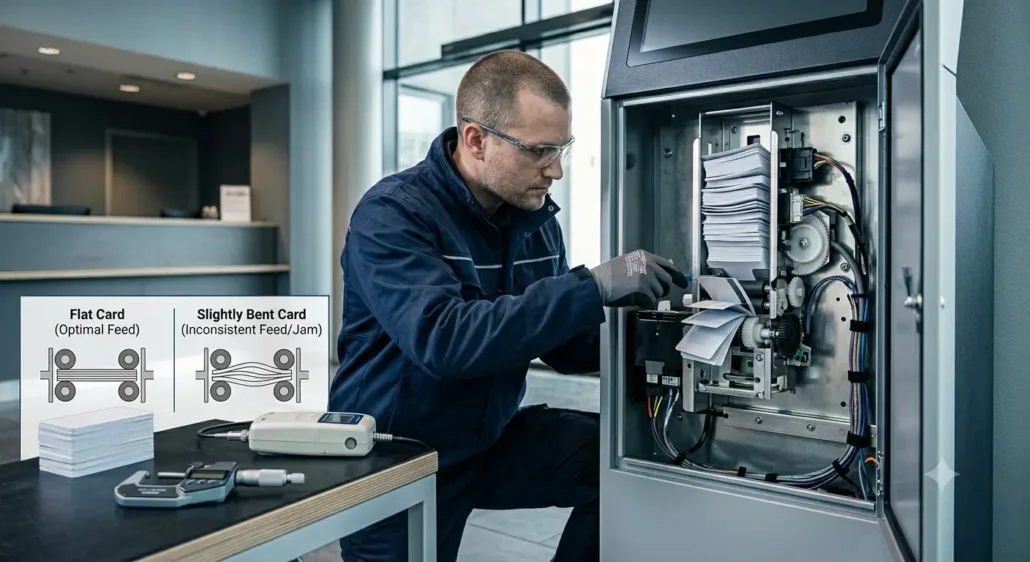
Worn Card Edges Cause More Problems Than Many Teams Expect
This is extremely common in long-term unattended deployments.
Especially in hotel environments.
At first, cards move through the dispenser perfectly.
Months later, systems begin processing cards with:
- worn edges
- slight warping
- tiny bends
- uneven surface friction
- inconsistent stiffness
Individually, none of these look serious.
Operationally, they slowly change how cards interact during separation.
Some technicians spend hours checking sensors and motors before eventually realizing that slightly worn cards were quietly affecting separation consistency.
That happens much more often than most early-stage projects expect.
Hotel Guests Usually Make Small Problems Feel Much Bigger
Technically, an intermittent double-card retry may seem minor.
Operationally, it can become very painful.
Especially at night.
A guest standing in front of a hotel kiosk at midnight usually does not care whether the problem came from:
- humidity
- card edge wear
- separation rollers
- static electricity
- inconsistent card thickness
They only see:
“The room card did not come out correctly.”
And once a queue starts forming behind the kiosk, even very small dispensing delays suddenly feel much larger operationally.
This is why hotel deployments expose dispenser weaknesses extremely quickly.
Humidity Quietly Changes Card Separation Stability
Humidity is one of the least discussed causes of intermittent double-card behavior.
But experienced technicians notice it constantly.
Especially in:
- coastal regions
- hotel lobbies
- transportation terminals
- underground parking systems
- semi-outdoor environments
Under certain conditions, cards begin sticking together slightly more than expected.
Not enough to completely stop operation.
Just enough to occasionally affect separation reliability.
That is often how intermittent double-card problems begin.
Quietly.
And because humidity changes throughout the day, the same dispenser may work perfectly during inspection and fail again later under different environmental conditions.
Those are some of the most frustrating problems in unattended systems.
Intermittent Problems Usually Frustrate Technicians More Than Complete Failure
Complete failure is easier.
At least the machine stops clearly.
Intermittent separation problems are much worse.
Because the dispenser may behave normally during testing.
Then suddenly feed two cards together again later during peak usage.
Some technicians eventually become more frustrated with unpredictable retry behavior than with complete hardware failure itself.
At least complete failures are easier to reproduce onsite.
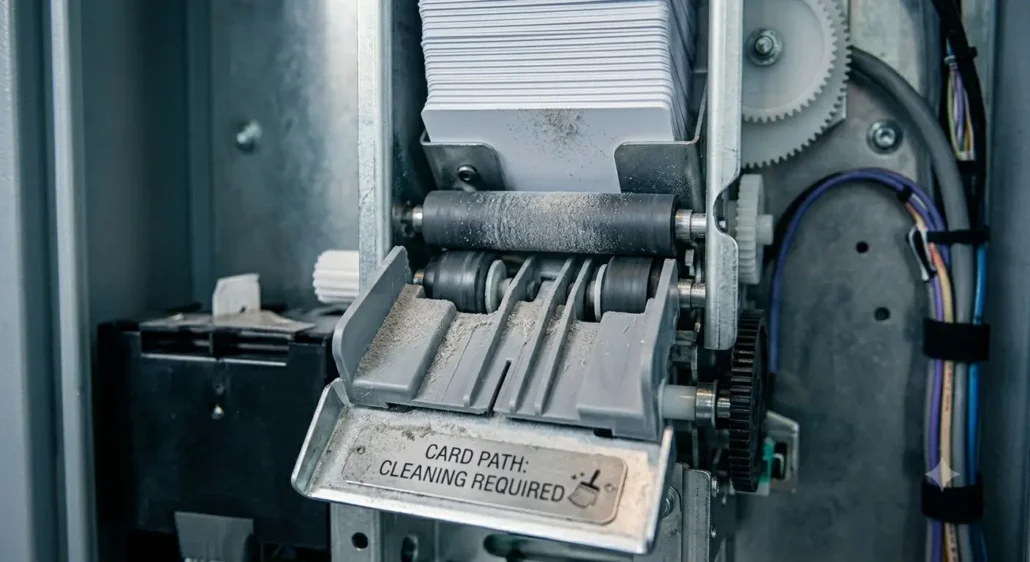
Dust Slowly Changes Separation Consistency Too
Dust rarely causes immediate dispenser failure.
That is exactly why many teams underestimate it.
Usually, dust slowly introduces:
- inconsistent movement
- occasional hesitation
- unstable separation timing
- random retries
Especially in:
- parking kiosks
- transportation terminals
- outdoor deployments
- high-traffic public environments
At first, the system still appears mostly operational.
Later, service frequency slowly increases.
That gradual degradation pattern is extremely common in unattended deployments.
Some Problems Only Appear After Rollout Expansion
This happens constantly in self-service projects.
A dispenser processing a few hundred cards per week may appear extremely stable.
Then rollout expands.
Now systems are processing:
- thousands of cards
- multiple card batches
- mixed user behavior
- nonstop unattended transactions
That is usually when small inconsistencies begin surfacing across multiple kiosks.
Many deployments look almost perfect during pilot stages.
The real operational differences usually appear much later.
Real Users Do Not Handle Cards Gently
This part rarely appears in technical brochures.
But field technicians notice it constantly.
Especially in busy environments.
Some users:
- pull cards aggressively
- bend partially issued cards
- retry repeatedly during delays
- force cards back incorrectly
- tug cards before dispensing completes
Over time, repeated user behavior gradually changes how dispensing systems wear internally.
That is one reason laboratory testing often feels very different from real deployment behavior several months later.
Real users do not interact with kiosks carefully.
Especially when they are tired, rushed or frustrated.
Static Electricity Quietly Makes Everything More Complicated Later
Especially in dry environments.
At first, systems may operate perfectly for months.
Then strange intermittent behavior starts appearing:
- inconsistent separation
- random retries
- occasional multi-card movement
- feeding hesitation
Technicians may initially suspect:
- firmware instability
- motor inconsistency
- sensor failure
- mechanical wear
Only later realizing that environmental static conditions were quietly affecting card interaction during movement.
Especially during seasonal changes.
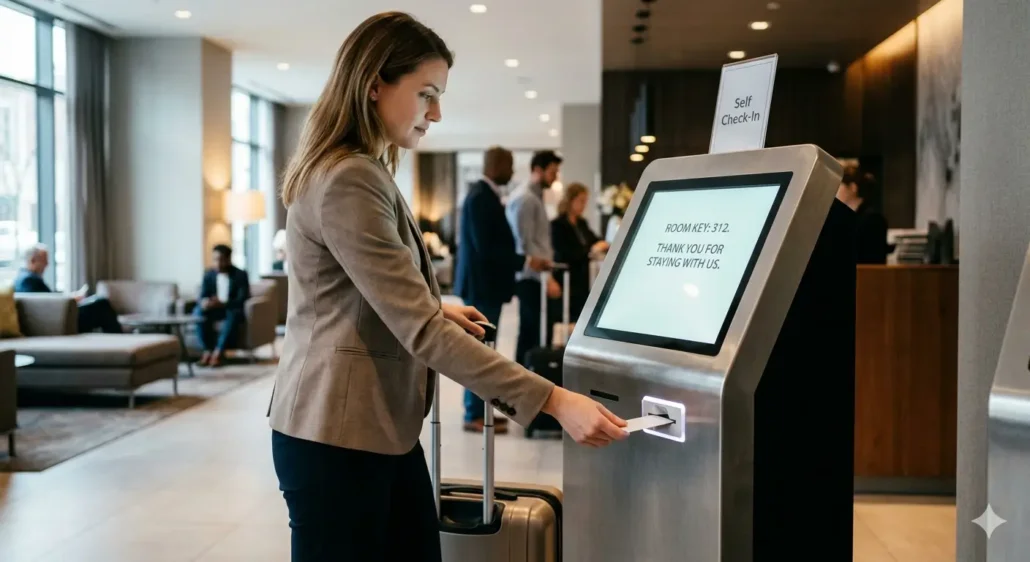
Some Integrators Eventually Slow the System Down on Purpose
This is one of those real deployment decisions that rarely appears in marketing material.
In some projects, teams eventually accept slightly slower dispensing speeds simply because the system becomes much more stable long-term.
That tradeoff happens more often than many people realize.
Because in unattended deployments, predictability usually matters more than theoretical peak performance.
Especially in customer-facing environments.
Many Double-Card Problems Are Technically Small
But Operationally Very Expensive
This is something many early projects underestimate.
Technically, an intermittent double-card issue may only happen occasionally.
Operationally, it can create:
- guest frustration
- longer queues
- staff intervention
- service calls
- reduced trust in self-service systems
And once users begin losing confidence in the kiosk, even small dispensing delays feel much larger psychologically.
That is why experienced deployment teams often become extremely sensitive to intermittent card-separation instability later.
The Real Question Is Usually Not “Does Anti-Double-Card Technology Exist?”
Almost every dispenser manufacturer offers anti-double-card mechanisms.
That part is not difficult anymore.
The real question becomes:
“How stable does card separation remain after months of unattended real-world operation?”
That is where real deployment differences begin appearing.
Especially in environments with:
- humidity fluctuation
- worn card inventory
- dust exposure
- heavy user interaction
- continuous runtime
- limited maintenance windows
At that stage, long-term operational consistency matters much more than showroom testing performance.
What Experienced Deployment Teams Eventually Prioritize
Interestingly, experienced integrators often stop evaluating dispensers mainly by specifications.
Later, they care much more about:
- long-term separation consistency
- environmental tolerance
- recovery workflow
- maintenance accessibility
- operational predictability
- service simplicity
Because after enough deployment experience, most teams realize:
the hardest problems are usually not catastrophic hardware failures.
They are small intermittent inconsistencies repeated over thousands of unattended operating cycles.
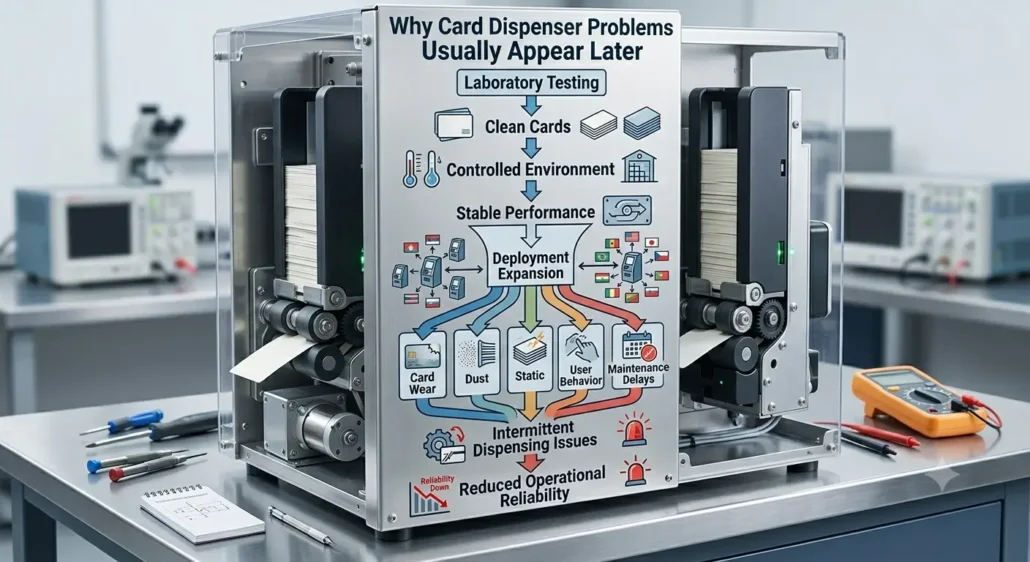
Double-Card Issue Troubleshooting Checklist
| Check Point | What to Inspect | Why It Matters |
| Card thickness | Confirm actual card thickness range, not only nominal specification | Mixed thickness can affect card separation |
| Card surface | Check glossy, matte, laminated, or embossed surfaces | Surface friction changes dispensing behavior |
| Static electricity | Test cards after storage and repeated handling | Static can cause cards to stick together |
| Hopper loading | Check card alignment and stack pressure | Poor loading increases double-feed risk |
| Dust and humidity | Inspect storage and deployment environment | Environmental conditions affect card separation |
| Separation mechanism | Check rollers, gates, springs, or wear parts | Worn parts reduce separation accuracy |
| Status feedback | Confirm double-card or abnormal feed detection if supported | The host system needs reliable error response |
Short Industry Takeaway
Most double-card issues do not begin during testing.
They begin later — quietly — after unattended systems process thousands of cards continuously under changing environmental conditions.
That is when teams begin realizing:
long-term separation stability depends not only on the dispenser mechanism itself, but also on:
- humidity
- card wear
- dust accumulation
- user behavior
- static electricity
- maintenance workflow
- operational scale
And honestly, many of those realities only become fully visible after rollout expansion has already started.
Frequently Asked Questions
What causes double-card issues in card dispensers?
Common causes include humidity, static electricity, worn card edges, dust accumulation, inconsistent card thickness and long-term mechanical wear.
Why do double-card problems usually appear later?
Most testing environments are highly controlled. Real deployments gradually introduce environmental variation, user interaction and long-term operational stress.
Does humidity affect card dispenser reliability?
Yes. Humidity can slightly increase card surface adhesion and reduce separation consistency during unattended operation.
Why are intermittent dispenser problems difficult to diagnose?
Because the system may work normally during inspection while environmental conditions continue changing throughout the day.
Why do hotel self check-in kiosks expose dispenser problems quickly?
Hotel environments combine high user traffic, rushed guests and continuous operation, making intermittent dispensing instability much more visible operationally.
Can double-card issues be caused by card quality?
Yes. Card thickness variation, surface coating, static behavior, warping, and edge quality can all affect card separation. Production card samples should be tested before project approval.
How should system integrators test double-card risk?
They should test repeated dispensing with full, half-full, and low-card hopper conditions, using the actual cards planned for deployment. Testing should include aged cards, stored cards, and cards from different production batches.
Can software prevent double-card dispensing?
Software cannot fully prevent mechanical double-card feeding, but it can detect abnormal status, stop the transaction, trigger a recovery process, and prevent unverified cards from being issued.
Recommended SNRO Hardware Solutions
RFID Card Dispenser Series
Commonly used in:
- hotel self check-in kiosks
- visitor management systems
- access-control terminals
Typical advantages:
- stable unattended card issuing
- industrial movement structure
- long-term deployment support
Motorized Card Issuer Solutions
Commonly used in:
- parking systems
- ticketing kiosks
- membership terminals
Typical advantages:
- controlled card movement
- anti-double-card workflow
- operational stability
Industrial Mini PC Solutions
Commonly used in:
- self-service terminals
- unattended kiosk platforms
- integrated access systems
Typical advantages:
- continuous runtime support
- compact industrial integration
- long-term operational stability
Related Guides
- Why Card Dispensers Fail in Real Self-Service Systems?
- How Dust and Humidity Affect Card Dispenser Reliability?
- Why Kiosk Printers Jam in Real Deployments?
- Why Maintenance Accessibility Matters in Self-Service Kiosk Design?
- Why Card Dispensers Seem Reliable During Testing But Fail Later in Real Deployments?
- Why Card Quality Causes More Dispenser Problems Than Many Teams Expect?
Related Solutions
- Hotel Self Check-in Hardware Solutions
- Self-service SIM card issuance Solutions
- Visitor Management Card Issuance Solutions
- Parking & Ticketing Hardware Solutions
- Smart Locker Hardware Solutions
- Access Control Kiosk Hardware Solutions
- Self-Checkout Hardware Solutions
- Queue Management Hardware Solutions
Learn more about system architecture: Card Dispenser Hub
Planning a Long-Term Self-Service Card Issuing Project?
One thing many teams eventually discover:
Most double-card problems are not dramatic hardware failures.They are small intermittent inconsistencies that quietly begin appearing after unattended systems run continuously in the real world for months.
If your project requires stable card issuing for hotel self check-in, visitor management, parking, membership, smart locker, or access control systems, SNRO can help review your card samples, dispenser structure, hopper requirement, interface, and integration workflow before sample testing.